
Molten salt reactor project begins testing core materials
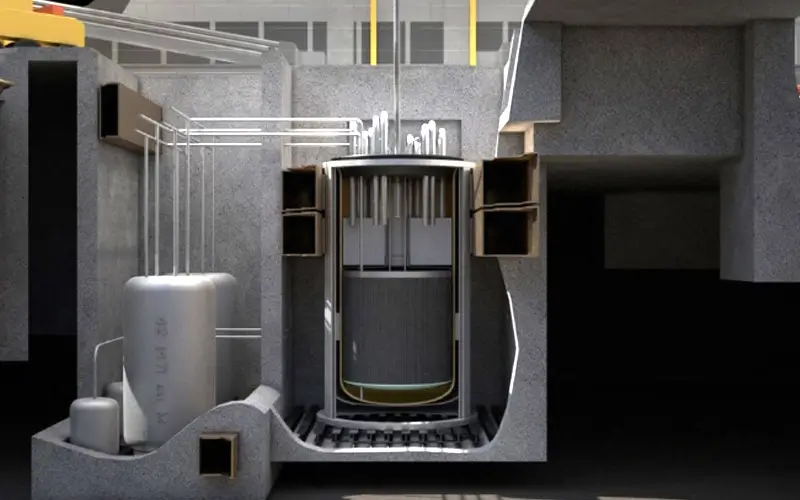
Dutch NRG will perform material testing, including graphite as a moderator, for key components of Terrestrial Energy’s Integral Molten Salt Reactor (IMSR) under a contract announced on February 5. The IMSR is a Generation IV reactor being developed in Canada and the United States. NRG’s services include technical advice on test design and preparation, high-radiation exposure of test specimens, and evaluation of test materials.
Molten salt reactors use fuel dissolved in molten fluoride or chloride salts, which function as both the reactor fuel and the coolant. This means that such a reactor cannot have accidents related to loss of coolant leading to fuel meltdown. In the IMSR, all reactor components, including the heat exchangers to the second loop, in which non-radioactive molten salt circulates, are in an encapsulated vessel that is replaced every seven years. The IMSR is designed as a modular reactor for the production of electricity and/or the production of heat for industrial processes.
In 2017, Terrestrial Energy completed the first phase of the Canadian Nuclear Safety Commission’s assessment of the IMSR. The company plans to submit an application to the U.S. Nuclear Regulatory Commission for design certification and a construction permit for the IMSR-400 by the end of 2019. The company and Canadian Nuclear Laboratories are exploring the possibility of locating a commercial IMSR reactor at Chalk River. An agreement was also signed with Energy Northwest in March 2018 to build the first U.S. IMSR at a site at Idaho National Laboratory. In March 2018, Terrestrial Energy signed a technical support agreement with the European Commission’s Joint Research Centre (JRC) in Karlsruhe, Germany. Under this agreement, the JRC will conduct fuel and primary coolant tests on the IMSR.
